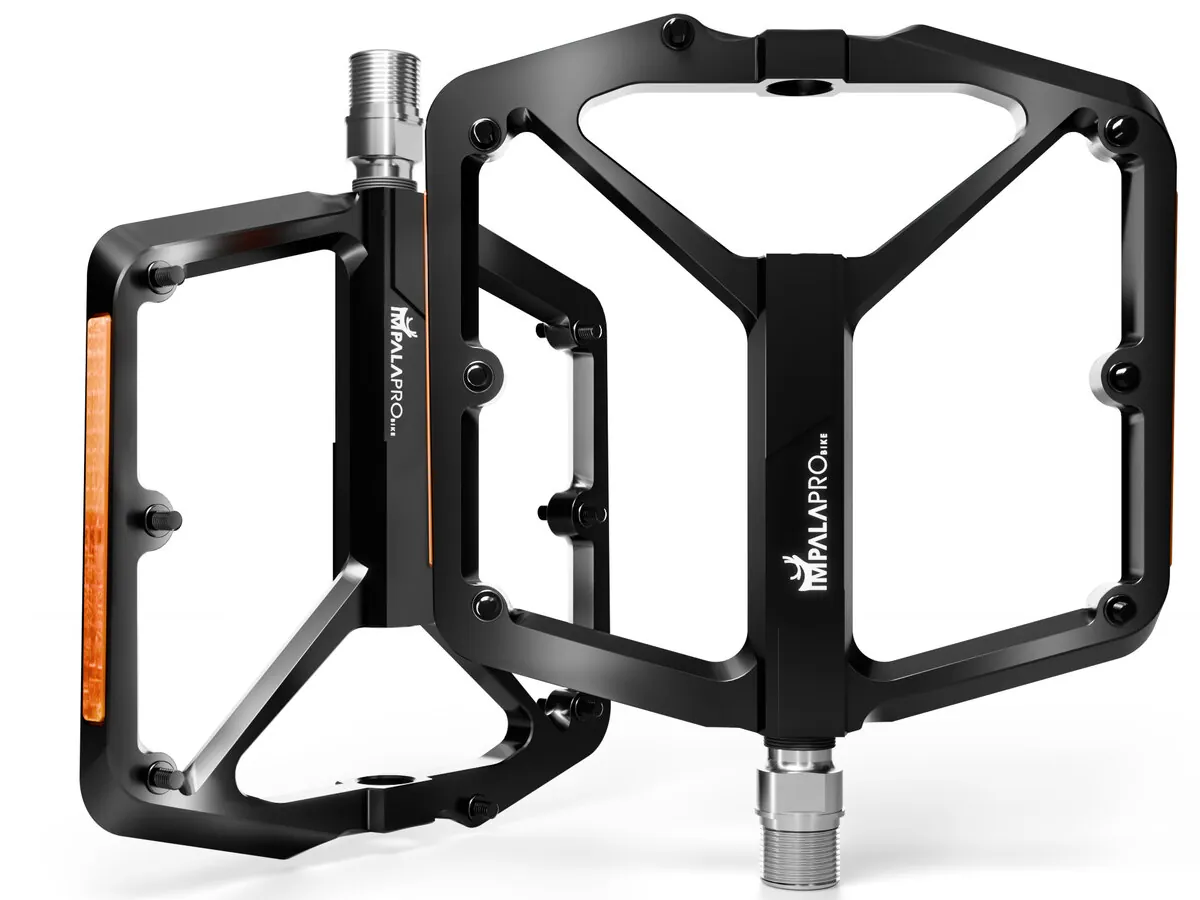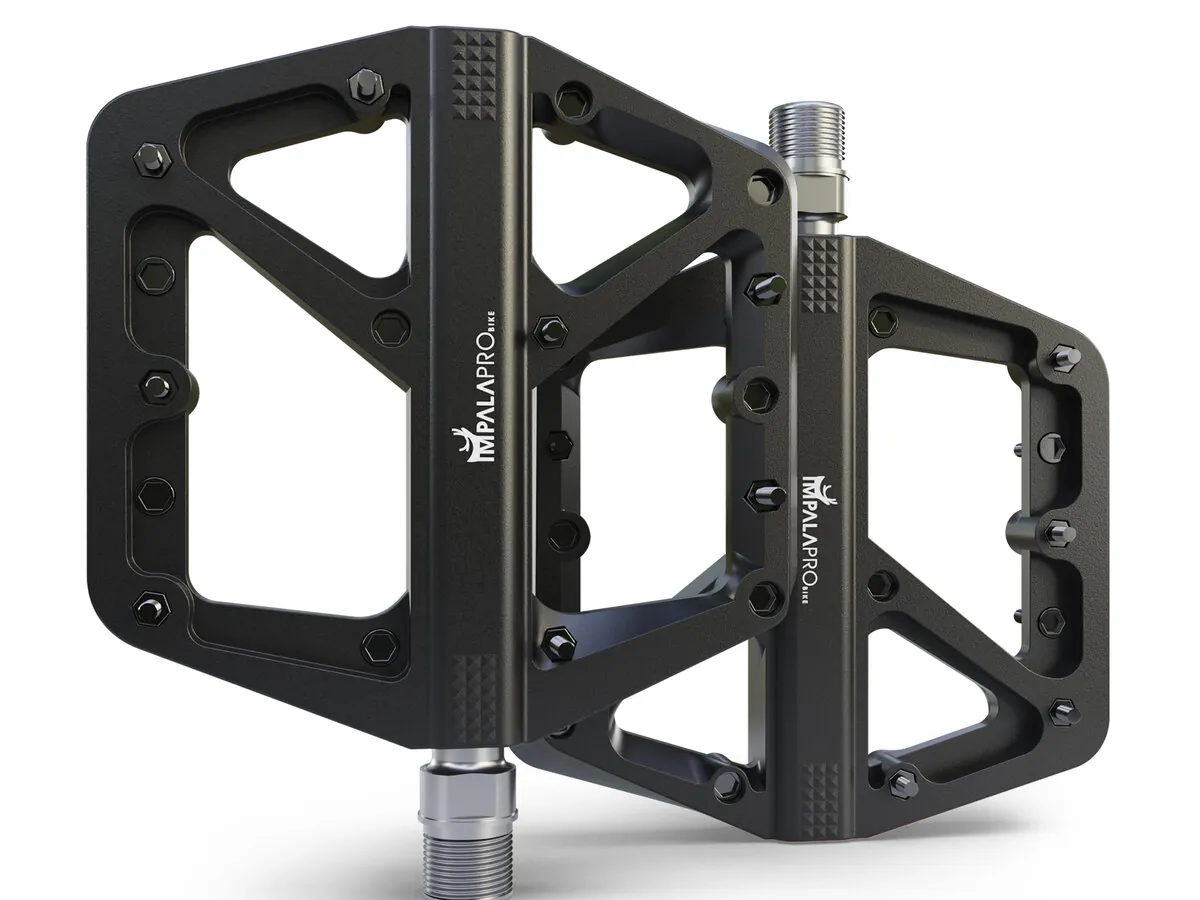
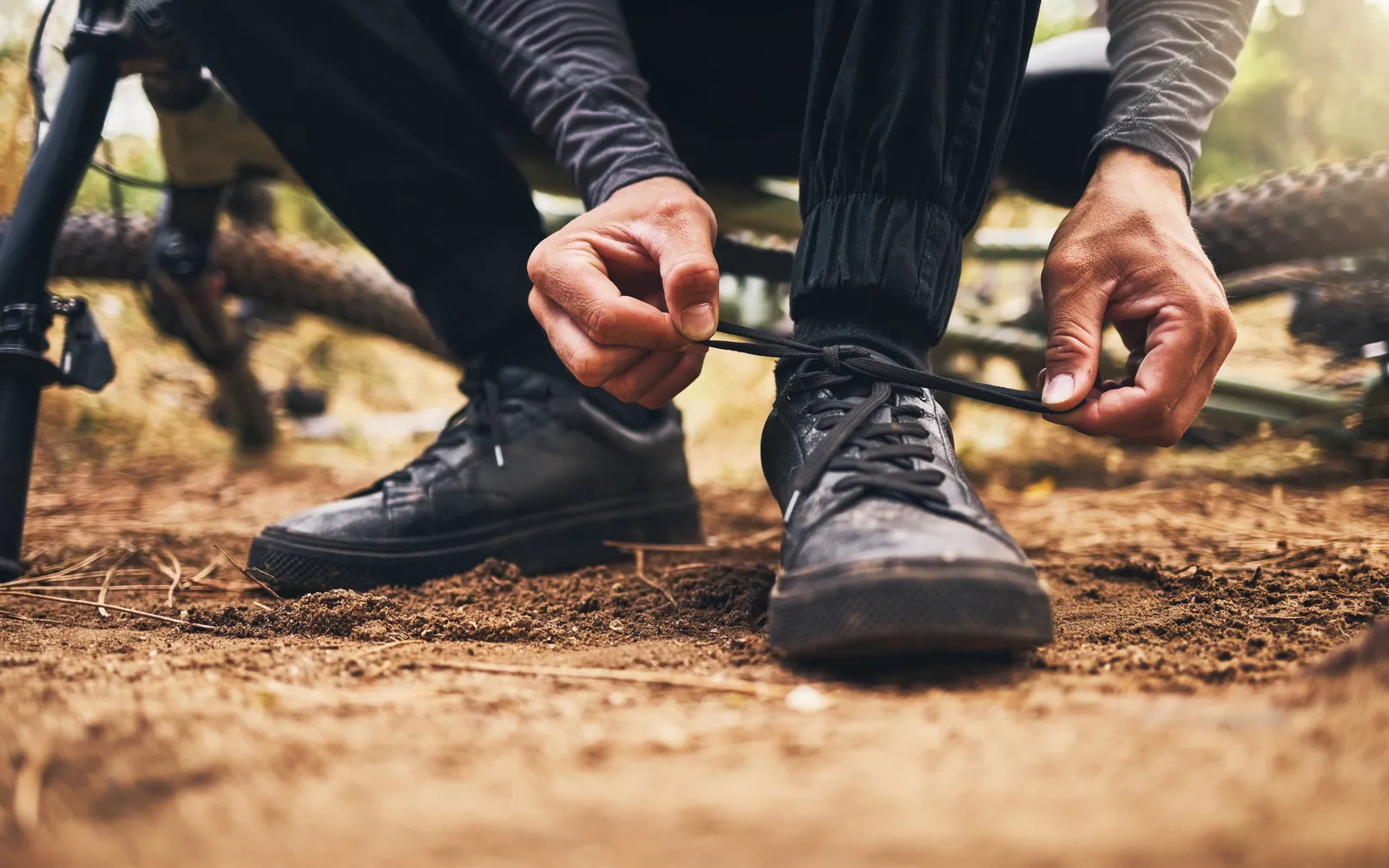
What are flat bike pedals?
In cycling, the right kit is what lets you get the most out of every ride. And on flat pedals, choosing the right shoes makes all the difference to performance and comfort. In this buyer's guide we run through the key features for choosing the best shoes for flat pedals and which type suits each rider.
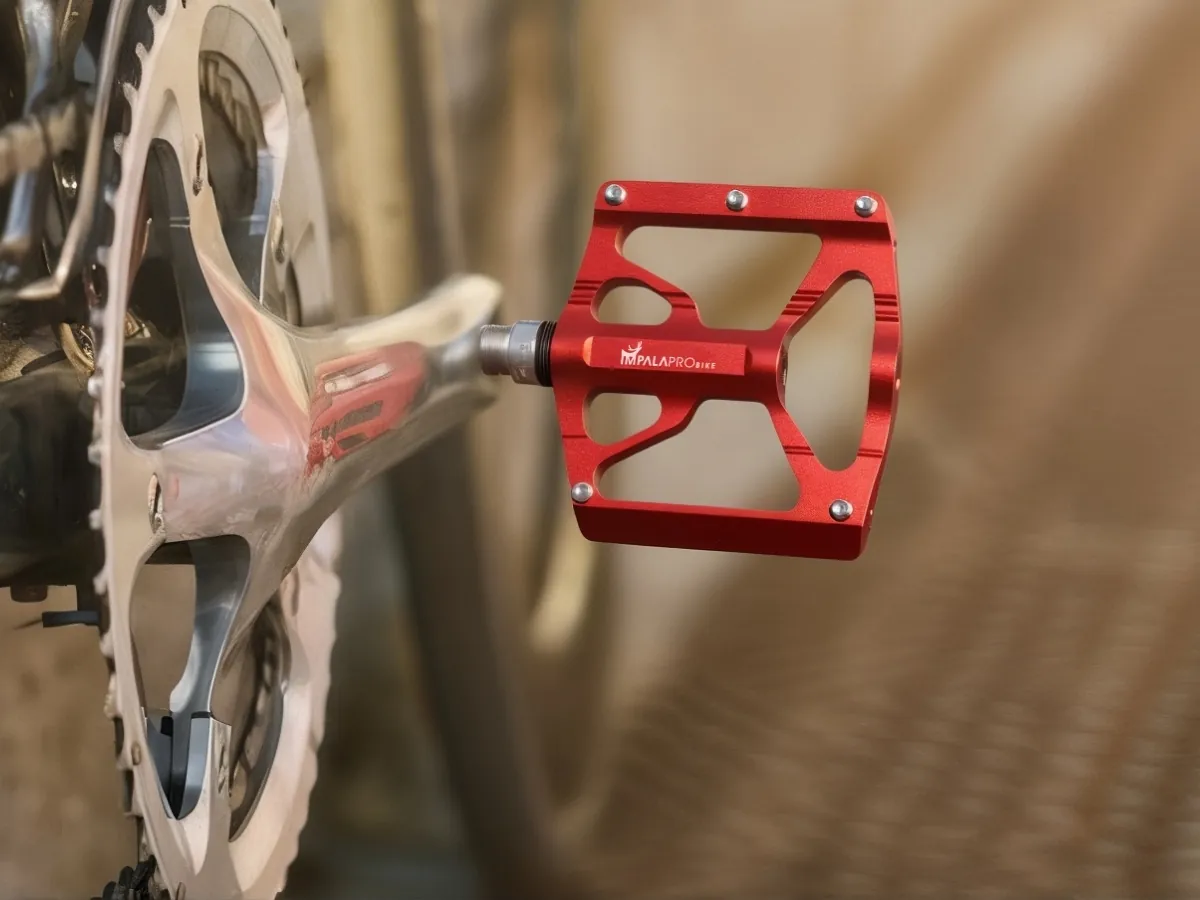
Before you decide, it helps to understand exactly what these pedals are and what they are for. A flat (or platform) pedal needs no retention system to keep your foot in place.
- 01No retention. Unlike clipless pedals with cleats, nothing locks your foot to the pedal.
- 02Free foot. You place your foot freely on the pedal, reposition it on the move and take it off easily whenever you need to.
- 03A less rigid connection. That is why they are ideal for riders who prefer a less rigid connection to the bike.
MTB shoes for flat pedals: the comfort and grip you need
In mountain biking on flat pedals, your shoes play a key role in your performance and your safety. These are the reasons to wear MTB shoes made specifically for flat pedals:
- 01Comfort on every ride. They are designed with the rider in mind, with a cushioned sole and an ergonomic insole that reduce fatigue and add comfort on long rides.
- 02More grip and control. They have a sticky rubber sole that grips the pedal. That gives you more control over the bike and lets you take on technical terrain with confidence.
- 03Protection and durability. Tough materials and reinforcements in key areas protect against knocks and scuffs. And their robust construction ensures a long life, even in harsh mountain conditions.
Key features of shoes for flat pedals
When choosing shoes there are several key features to bear in mind, because they make the difference in comfort, performance and durability:
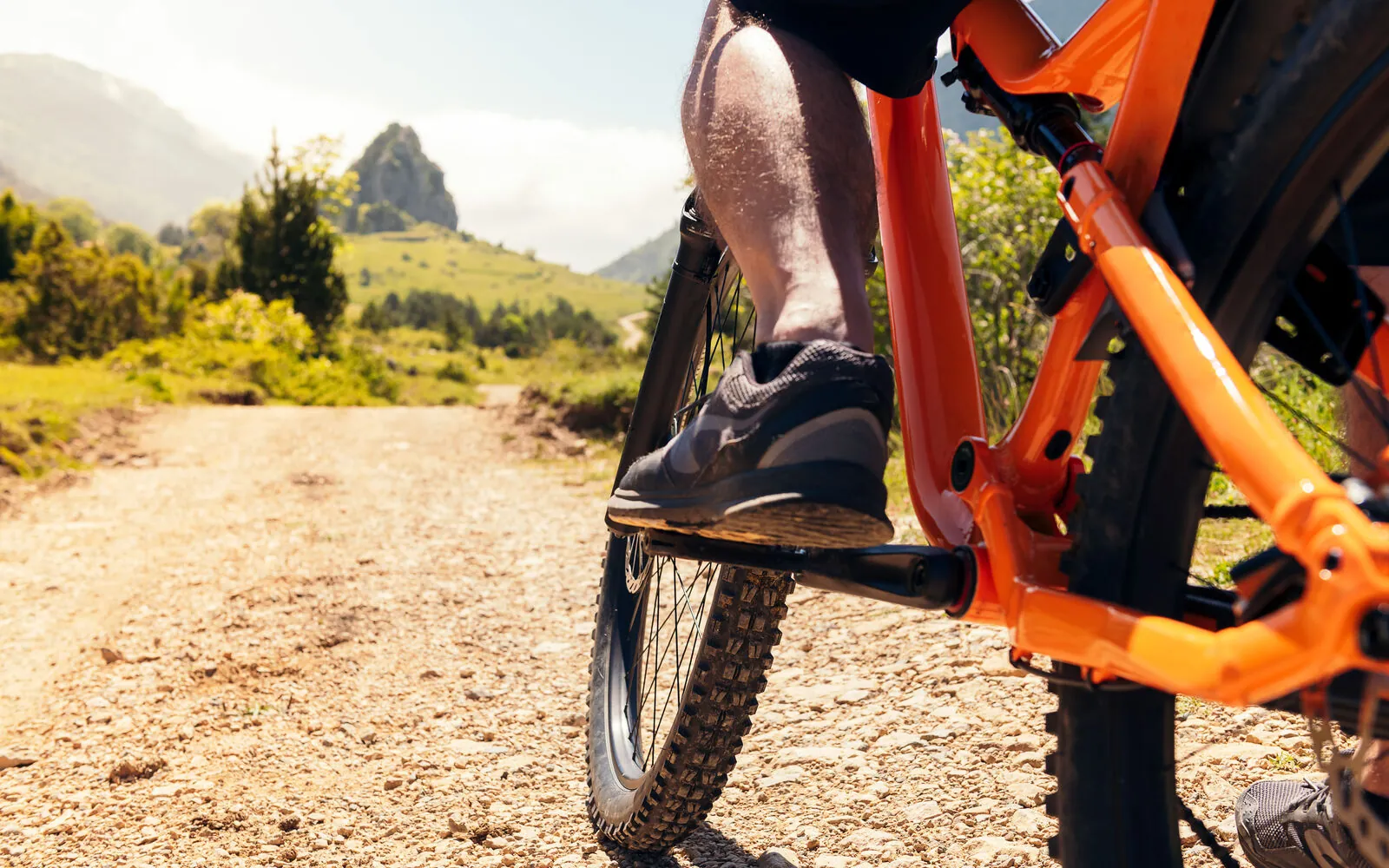
- 01Tough rubber sole. It has to deliver excellent traction on the pedal: it keeps your foot firmly in place while you pedal and prevents slips. Look for quality rubber for the best grip and the longest life.
- 02Breathable design. Cycling is an intense activity that generates heat and sweat. A breathable design lets air circulate, keeps your feet cool and dry, prevents dampness and reduces the risk of blisters and odours.
- 03Reinforcements in key areas. A reinforced toe box and heel give more protection and durability against the wear caused by repeated contact with the pedals and the ground.
- 04Optional cleat compatibility. Although they do not need cleats, some models let you add them in case you move to clipless pedals in the future. Handy versatility if you plan to try other styles of riding.
Which MTB shoes to buy: factors to consider
If you are shopping for MTB shoes, go through these nine factors before you buy. They help you get it right and save you a return.
- 011. Type of riding. Do you love technical trails and steep descents, or do you prefer the road and speed? Shoes for flat pedals are designed for MTB and cope well with rough terrain, although they also work for urban riding or touring.
- 022. Experience level. If you are starting out, go for comfortable, versatile shoes that give a good feel of grip on the pedal. With more experience and technique, you can move to more technical models, with more power transfer and stability.
- 033. Closure system. It is essential for good support and comfort. The most common: laces (traditional and affordable, with a good fit), Velcro (quick and easy, although it wears over time), rotary dial with a twisting lace (the most precise, like on ski or snowboard boots) and ratchet buckle (a strap that slots into a buckle and locks and releases with a button).
- 044. Material. It matters above all in the sole, which is in direct contact with the pedal. Fibreglass, nylon and polyamide are common. A flexible sole gives comfort on long rides; a stiff one gets more power out of every pedal stroke. Think about your discipline and whether you put comfort or performance first.
- 055. Pedal compatibility. Some models are universal and others are designed specifically for flat or clipless pedals. Read the product description and check the spec sheet to make sure they are compatible.
- 066. Weather. Some models are designed for a particular season, although the label rarely says so: read the description. In summer, make sure they breathe to keep your feet cool and dry. In winter, look for water resistance or thermal insulation.
- 077. Size. Key to riding in comfort. Measure the length of your foot in centimetres and check each brand's size chart, because it varies from one to another. You will usually need one size up from your normal size. Try them on with your usual socks, leave 4-5 mm of room at the heel and make sure your toes do not touch the end.
- 088. Budget. There are options in every price range. Decide how much you want to invest and look for shoes that fit your budget without sacrificing quality and performance: a well-built pair is a long-term investment. On Amazon.co.uk, the best-selling flat pedal shoes usually sit between £60 and £90.
- 099. Design. It is not the most important factor, but it can clinch the purchase. Every brand has everything from simple designs to very eye-catching ones. Balance features, quality and price and, within that, pick the one you like best.
In short: look for performance, protection and comfort, and pay attention to the closure system, the material and compatibility with your pedals.
The best MTB shoes for flat pedals
The best MTB shoes for flat pedals are the ones that combine comfort, grip and durability. But they are not defined by the brand; they are defined by how well they suit the way you ride.
These are the shoe profiles that work best for each use, and what the top-rated models have in common:
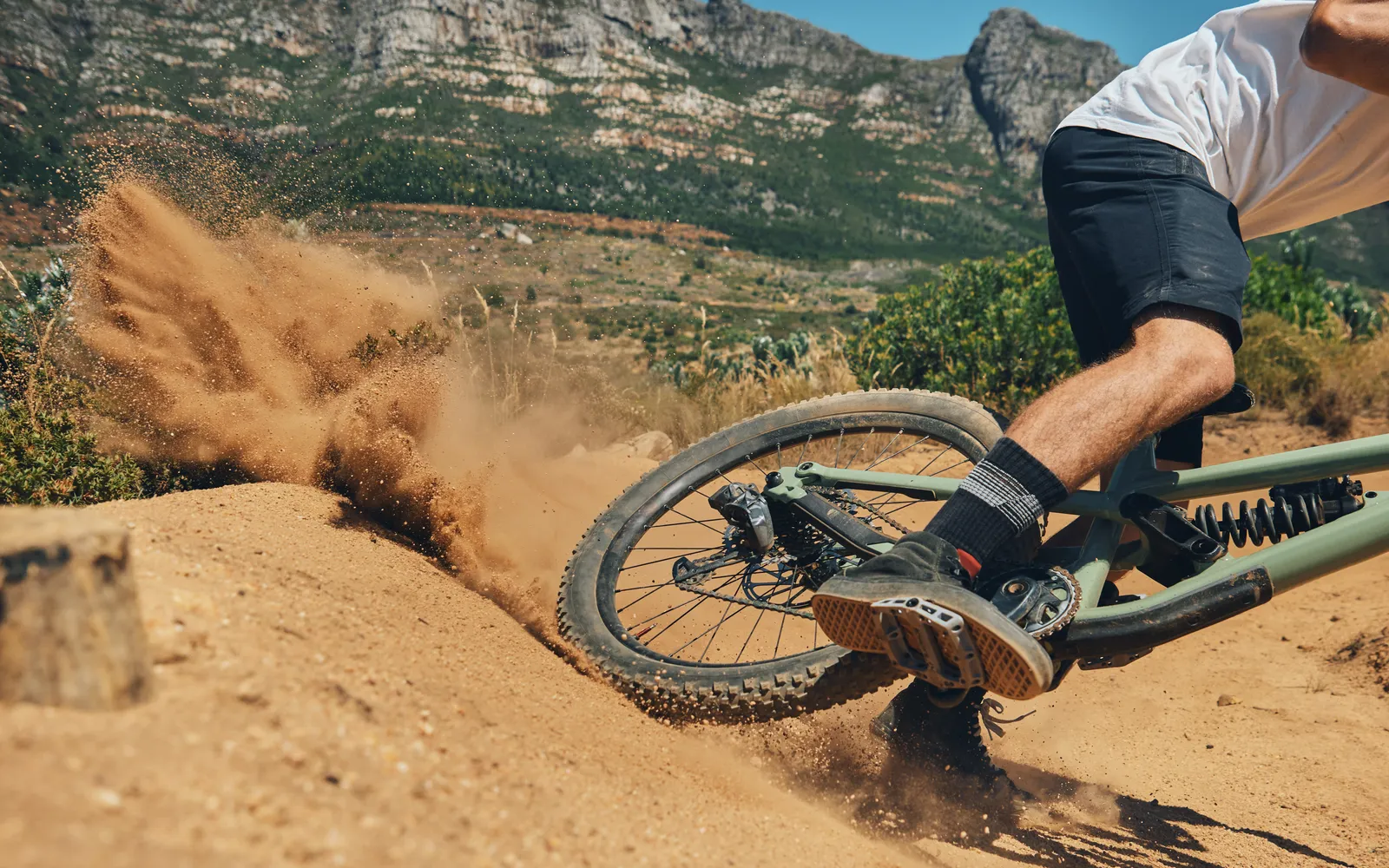
- 01For hard pedalling (XC). A stiff composite, fibreglass or carbon sole for better power transfer, low weight and a rotary dial for a precise, comfortable fit.
- 02For maximum comfort. A one-piece seamless upper that moulds to the foot, an inner lining that stops sweat building up and Velcro straps that hold the foot well.
- 03For trail and heavy use. A multi-layer or scratch-resistant microfibre upper, a reinforced heel that extends the life of the shoe and a robust nylon sole with good grip.
- 04For walking and clearing obstacles. Rubber or TPU lugs with good traction and anti-abrasion reinforcements, so you can hop off the bike, walk with ease and climb steep ramps without slipping.
- 05For mud and rain. Water-repellent materials that do not soak up water: the sole keeps its stiffness wet or dry, and your feet finish the ride dry.
- 06For the future. If you think you might try clipless pedals one day, look for a model that takes optional SPD-compatible cleats.
MTB shoe models worth knowing
Here is a selection of MTB models highly rated for their comfort, grip and durability. Several of them take SPD-compatible cleats, so they work for you today on flat pedals and tomorrow if you make the jump to clipless.
The details of each model are those published by its manufacturer: check them on their website before you buy.
- 01Spiuk Aldapa. One of the benchmark MTB shoes for value for money, designed for hard XC-style pedalling. BOA rotary dial for a precise fit, around 304 g, a stiff and efficient fibreglass composite sole, and lugs with good grip on different terrains. Affordable mid-range, for experienced riders.
- 02Luck Master. They stand out for comfort and lightness. A one-piece seamless construction that moulds to the foot, an inner lining that stops sweat building up, three Velcro straps and a stiff, light carbon sole. Toe and heel reinforcements for more protection and longer life.
- 03Sidi Trace 2. Known for their solidity and build quality. Suitable for Trail and Cross Country. Tecno 3 rotary closure plus two Velcro straps, a multi-layer Politex fabric upper and an MTB RS117 nylon sole with polyurethane inserts. Reinforced heel and excellent durability. They take SPD-compatible cleats.
- 04Luck Extreme 3.0. Stiff, solid, light and competitively priced. Three Velcro straps, one-piece seamless construction and a sole combining carbon and natural rubber. Toe and heel reinforcements, and a design in bold colours. Highly rated for value for money.
- 05Spiuk Altube MTB. A competitive character and great build quality. BOA closure, an XC-S polyamide and fibreglass sole for good power transfer, and TPU lugs that grip and let you walk with ease over ramps and obstacles. Breathable perforated upper, reinforced toe and heel, around 380 g per shoe. Versatile and durable, without being top-level race shoes.
- 06Mavic Crossmax Elite. Very versatile off the tarmac, for dirt, cyclocross and XC. Soft, tough, easy-to-clean synthetic fabric, BOA L6 closure with a front Velcro strap and a carbon, polyamide and fibreglass sole with Contagrip lugs for long-lasting grip. Ortholite insole that dampens vibration, around 350 g. They take SPD-compatible cleats.
- 07Northwave Scorpius 2 Plus. For Rally and XC, light and built for heavy use. Heat-sealed multi-layer construction in scratch-resistant microfibre, an SLW 2 ratchet closure at the top and Velcro below, and a triple-density Speedlight sole with rubber studs. Built-in ventilation and toe and heel protection. They take SPD-compatible cleats.
- 08Sidi Eagle 7. The evolution of the Eagle 5. Tough, light, water-repellent Microtech microfibre; a combination of closures (Caliper ratchet buckle, Soft Instep 2 strap and high-security Velcro) that spreads pressure over the instep. A Millennium 5 carbon sole that does not soak up water and keeps its stiffness wet or dry, reinforced heel and replaceable heel pad. Around 355 g per shoe; they take SPD-compatible cleats.
- 09Fizik Terra X5. For riders who want to improve their pedalling on the mountain bike. Stiff carbon sole, perforated upper for ventilation, TPU lugs that grip on any terrain and a Velcro closure with a Boa L6 micro-adjust dial. Breathable inner mesh and a padded tongue against impacts. Around 282 g per shoe; they take SPD-compatible cleats.
If you are only going to ride flat pedals, prioritise shoes with a flat, soft rubber sole; those with a stiff lugged sole and a cleat mount perform better on clipless or dual-sided pedals.
Frequently asked questions
Consider comfort, performance and durability. Look for a tough rubber sole that grips the pedal well, a breathable design to keep your feet cool and dry, and reinforcements in key areas for more protection and longer life.
Yes, many are versatile and work for other styles. Some even let you add cleats if you decide to switch to clipless pedals.
Yes. They are designed to perform and protect on demanding terrain. Even so, match your choice to the type of MTB riding you do and your personal preferences.
They are not strictly necessary, but they offer better grip and protection, and that improves your riding experience on every outing.
Shoes for flat pedals have no retention system: you can put your foot down at any moment. Clipless pedals need cleat-compatible shoes to lock onto the pedal.
Yes, Decathlon and the big sports chains stock models for MTB flat pedals. Apply the same criteria as in this guide: a rubber sole that grips, a good fit, reinforcements and the right size.
There are well-known brands in shoes for flat pedals, such as Five Ten, Giro or Specialized. But the shoe matters more than the logo: sole, closure system, reinforcements and the right size.
It varies quite a lot: on Amazon.co.uk, MTB shoes start at around £45 and specific flat pedal shoes go past £120. The sweet spot for value for money is around £60 to £90.
Not all of them. Some brands offer versions with waterproof or water-repellent treatments to keep your feet dry in wet conditions.
Yes, especially if you put comfort first and want to be able to walk easily when you are not pedalling.
It depends on the model and the materials. Generally, between 300 and 500 grams per pair.
Yes. They usually have a flexible sole that lets you walk well when you are not pedalling, which is especially useful on technical terrain.
No. Just clean them regularly, especially if they are exposed to mud or dirt, to keep them in good condition and extend their life.